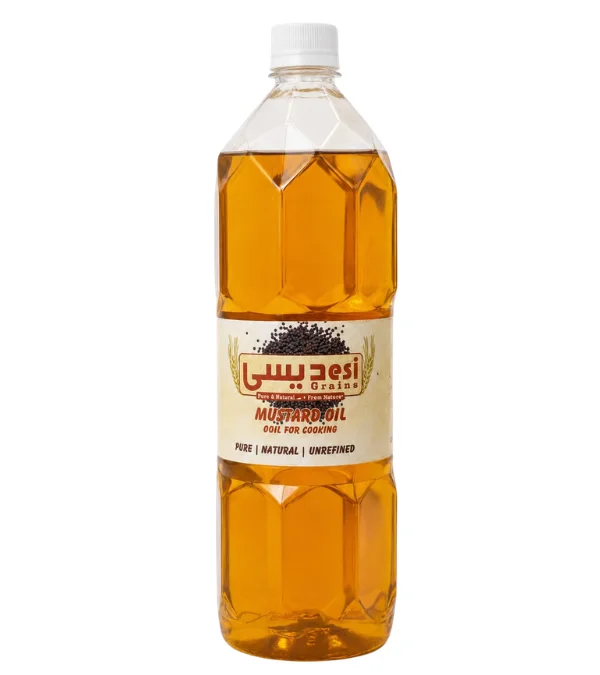
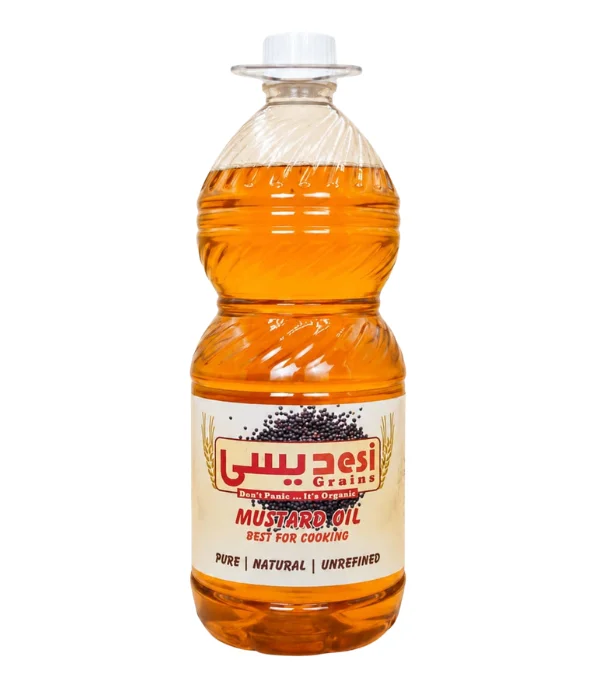
What is Cold-Pressed Mustard Cooking Oil?
Cold pressed mustard cooking oil, also known as sarson oil or kachi ghani ka tel, is extracted through mechanical pressing without the use of chemical solvents. During this process, mustard seeds are pressed under slow, continuous pressure, keeping the temperature below 40–45°C at all times.
This careful temperature control is what makes the difference. The oil retains its full nutritional profile, including Omega-3 fatty acids, Omega-6 fatty acids, Vitamin E (tocopherols), and natural antioxidants, all of which are significantly reduced during the refining, bleaching, and deodorizing stages that commercial mustard oils go through.
The Kachi Ghani Process: How It Works
Kachi ghani is a traditional South Asian oil extraction method using stone-pressed or cold-press technology. At Desi Grains, we follow this method using modern cold-press equipment:
- Cleaning: Mustard seeds are thoroughly cleaned to remove dust, moisture, and impurities
- Cold pressing: Seeds are pressed at low temperature with no chemicals involved
- Natural settling and light filtration: Sediment is removed without bleaching agents
- Bottling without additives: No preservatives, no artificial colour, no added fragrance
Each batch yields only 30 to 35% oil, far less than the 60 to 70% yield from chemical extraction, but what you get is completely pure.
Nutritional Profile, Cold-pressed Mustard Oil (Brassica juncea)
| Nutrient | Approx. Amount per 100ml |
| Omega-3 Fatty Acids (ALA) | 6–8g |
| Omega-6 Fatty Acids (LA) | 15–18g |
| Monounsaturated Fats (MUFA) | ~60g |
| Vitamin E (Tocopherols) | 15–20mg |
| Erucic Acid | Present (within EFSA and FSSAI safe limits) |
| Saturated Fat | ~12g |
Note on erucic acid: Cold-pressed mustard oil naturally contains erucic acid. International food authorities, including EFSA and FSSAI, have defined safe consumption limits, and mustard oil used in cooking falls well within those limits. This is true of both cold-pressed and refined mustard oils; the difference is that we are transparent about it.
Why Sarson Oil Is the Best Oil for Cooking in Pakistan
Sarson ka tel has been used in Pakistani and North Indian kitchens for centuries. Its unique characteristics make it especially well-suited for traditional South Asian cooking:
- Smoke point of approximately 480°F (249°C): Suitable for high-heat cooking, including moderate frying
- Bold, pungent flavour: Delivers the authentic taste in tadka, curry bases, and pickles
- Natural antimicrobial properties: Attributed to its allyl isothiocyanate content
- Warming properties: Traditionally consumed during colder months for its natural heat-generating effect
Best uses:
- Daily tadka and tempering
- Sarson ka saag and mustard-based curries
- Achar (pickle) preparation
- Marinating meat and vegetables
- Salad dressings and chutneys
Cold-pressed vs Refined Mustard Oil: What Is the Difference?
Still wondering what makes cold-pressed different? The table below explains it at a glance. For a deeper dive, read our complete guide on Cold-Pressed vs Refined Oil.
| Feature | Desi Grains Cold Pressed | Refined Mustard Oil |
| Extraction method | Mechanical cold press | Chemical solvent (hexane) |
| Vitamin E | Fully preserved | Reduced by 60–70% |
| Omega-3 content | Natural levels intact | Reduced during processing |
| Chemical residues | None | Hexane traces (~0.8 ppm) |
| Flavour | Natural, bold, authentic | Bland and deodorized |
| Colour | Natural golden-yellow | Artificially lightened |
| Trans fats | None | Small amounts are possible from deodorising |
Storage Instructions
Cold pressed mustard oil is an unrefined, living oil. A little care goes a long way:
- Store in a dark glass bottle or opaque container
- Keep in a cool, dark place away from direct sunlight and heat
- Seal tightly after every use
- Best consumed within 3 to 6 months of opening
- Can be refrigerated; it may solidify slightly, but quality is not affected
Why Choose Desi Grains Mustard Cooking Oil
Desi Grains has been producing natural wellness products in Lahore since 2019. Our cold-pressed mustard cooking oil is made from locally sourced mustard seeds in small, fresh batches. No third-party processing, no blended imports, no shortcuts, just pure, traceable, chemical-free sarson oil made the way it was always meant to be made.
Frequently Asked Questions
1. Is cold-pressed mustard oil safe for daily cooking?
Yes. Cold-pressed mustard oil has a smoke point of approximately 480°F (249°C), making it suitable for daily tadka, sautéing, and moderate frying. It is also free from chemical residues, bleaching agents, and preservatives, making it a safe and healthy choice for everyday use.
2. What is kachi ghani mustard oil, and how does it differ from regular mustard oil?
Kachi ghani mustard oil is extracted through mechanical cold pressing without heat or chemical solvents. Regular refined mustard oil uses hexane as a solvent and undergoes refining, bleaching, and deodorising, which reduces its Vitamin E content by 60 to 70% and can produce small amounts of trans fats. Kachi ghani oil retains its full nutritional profile.
3. Does Desi Grains cold-pressed mustard oil contain any additives or preservatives?
No. Desi Grains mustard oil contains no preservatives, no artificial colour, and no added fragrance. It is bottled directly after cold pressing and light filtration — nothing added, nothing removed.
4. How long does cold-pressed mustard oil last after opening?
Once opened, cold-pressed mustard oil is best consumed within 3 to 6 months. Store it in a dark glass bottle in a cool, dark place away from direct sunlight. It can also be refrigerated — it may solidify slightly but quality remains unaffected.
5. Is erucic acid in mustard oil harmful?
Cold-pressed mustard oil naturally contains erucic acid. However, international food authorities including EFSA and FSSAI have defined safe consumption limits, and mustard oil used in normal cooking quantities falls well within those limits. Both cold-pressed and refined mustard oils contain erucic acid — the difference is that Desi Grains is transparent about it.